
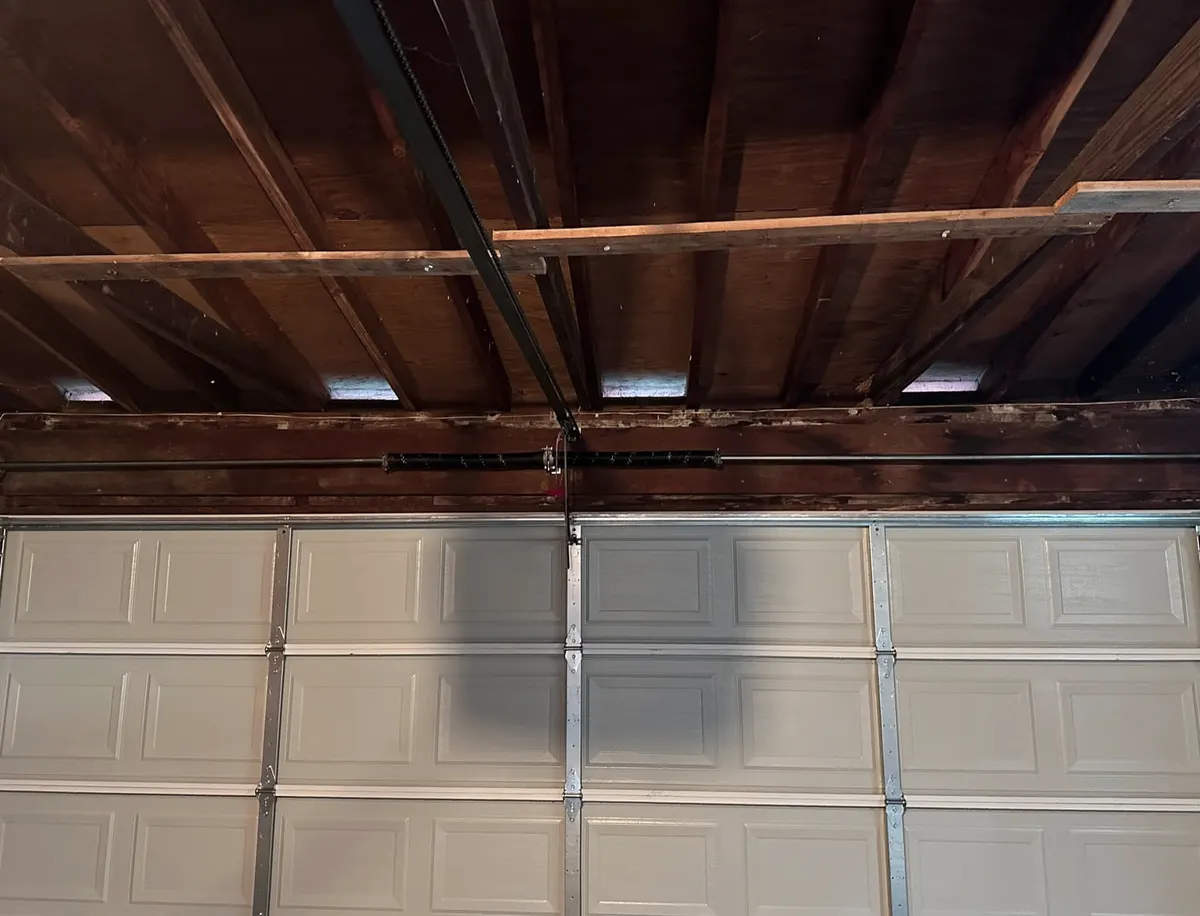
The Draft That Started the Argument
You're standing in the garage grabbing something off the shelf, and you feel it: cold air sliding in along the floor, or in summer, that sticky, warm breath coming through somewhere you can't quite see. Maybe you mentioned it at dinner. Maybe your spouse said "it's just a garage, who cares if it's cold in there." Here's the thing: if your garage is attached to the house, that temperature isn't staying in the garage. It's pulling heat (or AC) out of the rooms next to it.
Why an Attached Garage Isn't Just "Outside Space"
In a lot of older Baltimore-area homes, the garage shares at least one wall with living space, and often a ceiling with a bedroom above. That shared wall or ceiling isn't usually insulated to the same standard as the exterior walls of the house, because builders treated the garage as unconditioned space. So when the garage itself swings from freezing in January to muggy and humid by July, that temperature pushes through the shared wall into the house. Your furnace or AC has to work harder to compensate, even though the thermostat sits two rooms away.
The garage door is usually the weakest link in that envelope. It's the largest moving part of the house, built with seams, panel joints, and a bottom seal that has to flex every time the door opens and closes. Over a few winters of ice, rain, and temperature swings, those seals shrink, crack, or pull away from the frame.
What You're Actually Feeling (and Where to Look)
Settle the argument with evidence instead of opinions. On a cold night, walk out to the garage and check for these:
- Light under the door: Turn off the garage lights, close the door, and look for daylight or streetlight coming through along the bottom or sides. If you can see light, air is moving through the same gap.
- A cold or damp concrete floor near the door: Humid summer air and winter rain can seep in through a worn bottom seal, which also invites moisture problems, not just temperature loss.
- Frost or condensation on the inside of the door panels: This shows up on older steel doors with little to no insulation, especially after a cold snap.
- A gap you can fit fingers under when the door is fully closed, especially at the corners — older tracks and worn rollers let the door sit slightly crooked.
- The wall or door next to the garage feels noticeably colder or warmer than the rest of the house, especially if there's a laundry room, mudroom, or bedroom above the garage.
The DIY Checks That Settle It Tonight
- Close the door and shine a flashlight around the perimeter from outside while someone stands inside with the lights off, looking for leaks.
- Run a hand along the bottom seal and side weatherstripping — if it's hard, cracked, or pulling away from the track, it's not doing its job anymore.
- Check the panels themselves for dents or warping, which create permanent gaps no amount of weatherstripping will fix.
What It's Worth Fixing (and What's a Bigger Job)
A worn bottom seal or brittle weatherstripping is a cheap fix, generally in the range of $20–$75 in materials, and it solves most of the under-door draft on its own. If the door itself is an old uninsulated steel panel, though, no amount of weatherstripping closes that gap — the metal itself is a poor insulator. In that case, an insulated replacement door is a bigger investment but pays off over years of Baltimore's humid summers and icy winters, especially if there's living space right above or beside the garage.
When to Call Baltimore Garage Door
If you've checked the seals and panels and the draft is still there, or the door doesn't sit flush when closed, it's worth having a technician look at it. Baltimore Garage Door handles both ends of this problem: our Garage Door Maintenance service checks seals, tracks, and alignment so the door actually closes tight, and if the door itself is the issue, our Garage Door Installation team can walk you through insulated options sized for attached garages in older and newer homes alike.
If you're in Baltimore, Towson, Dundalk, Catonsville, Parkville, Essex, Pikesville, or Rosedale and that garage draft has been a running argument at your house, call Baltimore Garage Door and let's settle it for good.